AI content optimization: Working with AI, optimizing for AI
Published on August 20, 2026



Inspiration for your inbox
Subscribe and stay up-to-date on best practices for delivering modern digital experiences.
For the past two decades, SEO has been largely manual work. It required the average SEO professional to use countless different tools to sift through data, extract insights, present data, and implement optimizations. It was repetitive and time-intensive, and it rewarded patience as much as skill.
Now, with the arrival of AI and its subsequent permeation into the tech workforce, these workflows are starting to change and improve. And with search moving more towards AI-generated answers, two questions have become central: How do you harness AI for content optimization, and how do you optimize that content for AI?
What is AI content optimization?
AI content optimization falls into two distinct camps:
Optimization with AI: Using AI as a tool to complete optimization work more efficiently or faster.
Optimization for AI: Using AI as a channel, optimizing your content to be retrieved and cited by AI search experiences. This is known as generative engine optimization, or GEO.
When optimizing with AI, the AI works as your assistant. You might ask a tool to scan through a page you've already written and suggest a better title and meta description. Or, you might have it read a long article, cross-reference competitor content, and add suggestions for any sections you may have missed. When optimizing for AI, think of the AI as part of your audience. You could add a direct FAQ to a product page so an AI assistant can lift a clean answer straight from it. Or, you could take an answer that's currently buried in a paragraph, convert it to plain language, and place it near the top of the page.
AI content optimization isn’t the same as AI content creation (using AI to write content from scratch). AI content optimization is more about using AI to improve content that already exists.
Using AI to optimize content
What are the benefits?
One of the main benefits of AI content optimization is the ability to automate repetitive, time-consuming work like keyword research, content audits, and writing meta tags so teams can spend more time on strategic inputs or decisions.
AI can also read more content faster than a person, allowing it to discover optimization opportunities and content gaps you may miss when checking manually.
On top of that, you get the benefit of your content operations being able to scale without a matching rise in cost or headcount.
Across all three points, the underlying concept is the same: AI can take repetitive, menial tasks off your team's plate so their time goes toward work that requires human judgment.
Where does AI fit in the optimization workflow?
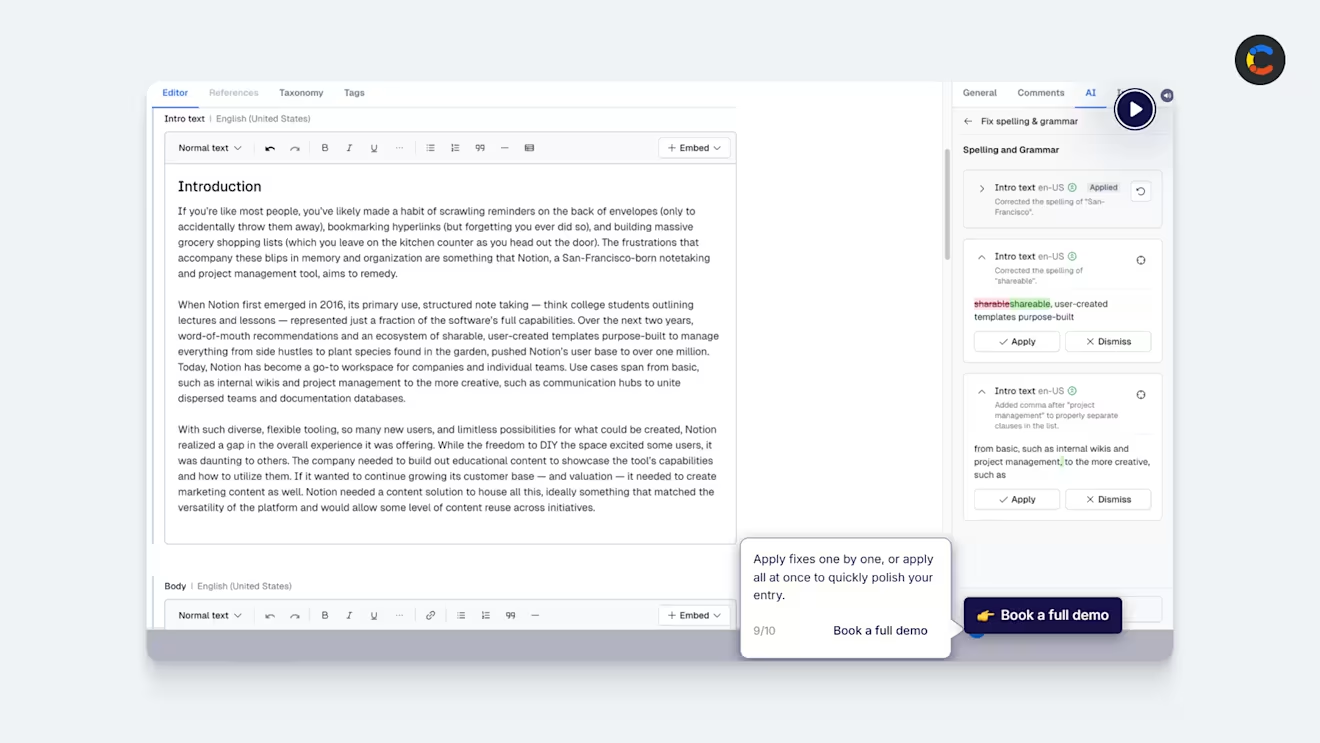
AI shows up across most of the optimization workflow. It can handle the analytical side of things, like keyword and search intent analysis, content audits across an existing site, and content-gap analysis against competitors. It can also handle page-level edits like readability and clarity improvements, meta titles, descriptions, and internal linking suggestions.
The catch to all of this is that AI edits should always be reviewed by a human. AI tools can confidently suggest keyword-stuffed content or invent a statistic to back a claim, both of which could be published and damage your reputation if someone isn't checking the output.
Optimizing content for AI search visibility
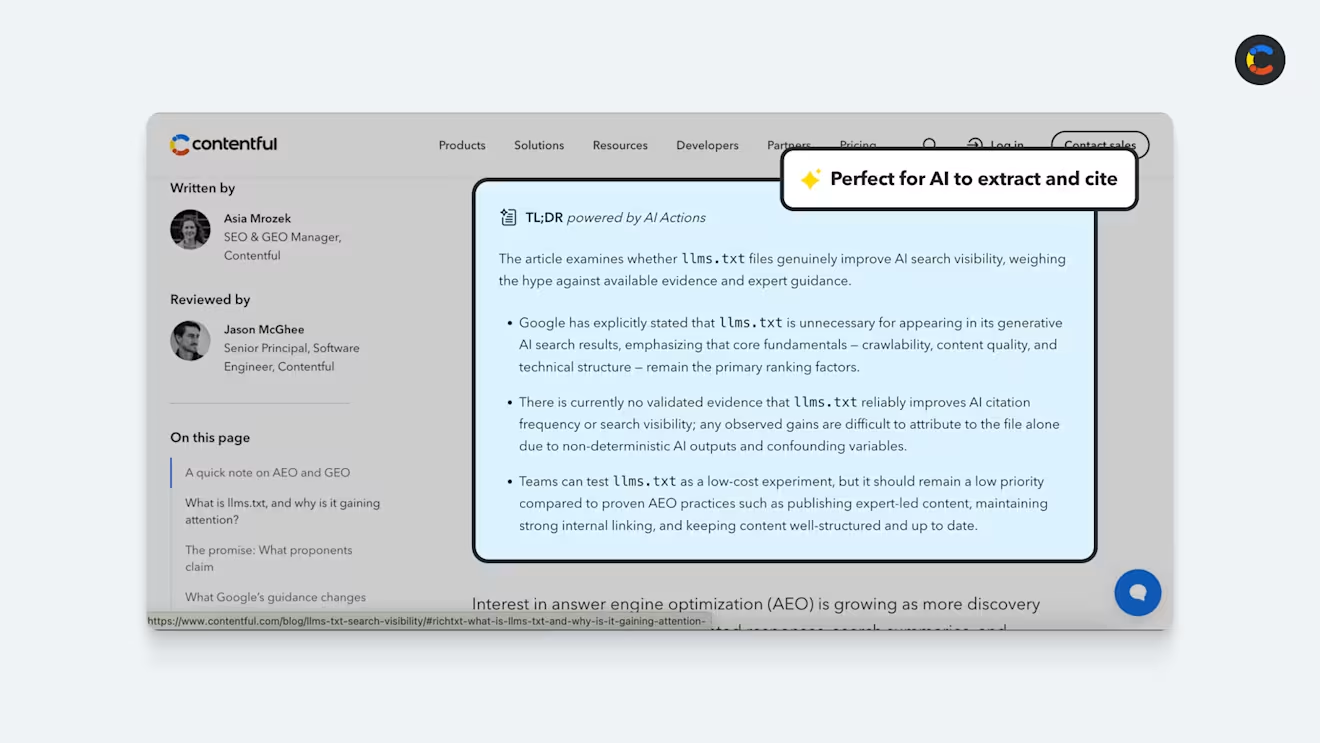
To understand how to best optimize your content for generative search, it's helpful to know how AI search experiences select content to show to users. They break pages into smaller chunks, retrieve what they deem to be relevant, and assemble answers from multiple sources. In contrast to traditional search, many AI systems retrieve at the passage level instead of the page level. This means you should structure your content for extractability using clean, self-contained answers.
Q&A blocks: Place the question in a heading and place a direct answer beneath it.
Scoped, single-topic sections: Make sure your sections have one subject each, all under clear headings.
Answer-first paragraphs: Lead with the answer, then provide more context.
Lists and comparison tables: Provide clean, extractable facts to AI.
Topic-based internal links: Connect related pages so AI systems can follow your site's structure in a way that makes sense.
After applying these optimizations, consider refreshing your most important content when information changes. Fresh, accurate, and extractable content gives you an edge in AI citations.
Structure helps get your content extracted, but it doesn’t help AI trust it. That’s where E-E-A-T (experience, expertise, authoritativeness, trustworthiness) factors that help traditional search come into play. Google, for instance, has confirmed its AI features run on its core search quality systems. Extractability and authoritativeness work together — one makes your content easily available, the other demonstrates value to the AI system.
How structured content connects the two sides of content optimization
Both optimizing with and for AI work best when your content has a clean and structured design. Imagine a scenario where you have some pages to optimize for AI visibility, and optimizing one page takes up an afternoon. If you have 500 pages to optimize in a small time frame, it seems natural to reach for AI to automate the work. But that will only be effective if those 500 pages share a predictable structure that AI can easily understand and act on.
The foundation to good content structure is content modeling. You define fields like a heading, summary, FAQ, and body instead of one undifferentiated blob of text. This consistent structure allows AI to act on your content programmatically at scale. Structure also serves optimizing for AI, as cleanly separated, labeled fields are exactly what AI systems (chat, search) thrive on to extract information from your pages.
Taking time on your content architecture optimizes for both outcomes. This is one of the many benefits of using a composable content platform like Contentful.
A practical AI content optimization workflow
AI content optimization isn’t something you do once at the end and then forget about. It's more like a continuous process in which the results feed back into the loop to improve over time. The two halves of AI content optimization are symbiotic. What you learn from measuring how AI finds and cites your content tells you what to plan and create next, and how.
The cycle below shows a typical flow:
Plan with AI assisted research and gap analysis first.
Create with structured content in mind.
Optimize with an AI pass for readability, meta titles, and internal linking up front before publishing.
Publish with a human-in-the-loop check.
Measure performance signals of the published content.
Results from the published content feed back into the next round of planning, so each pass is better targeted than the last one.
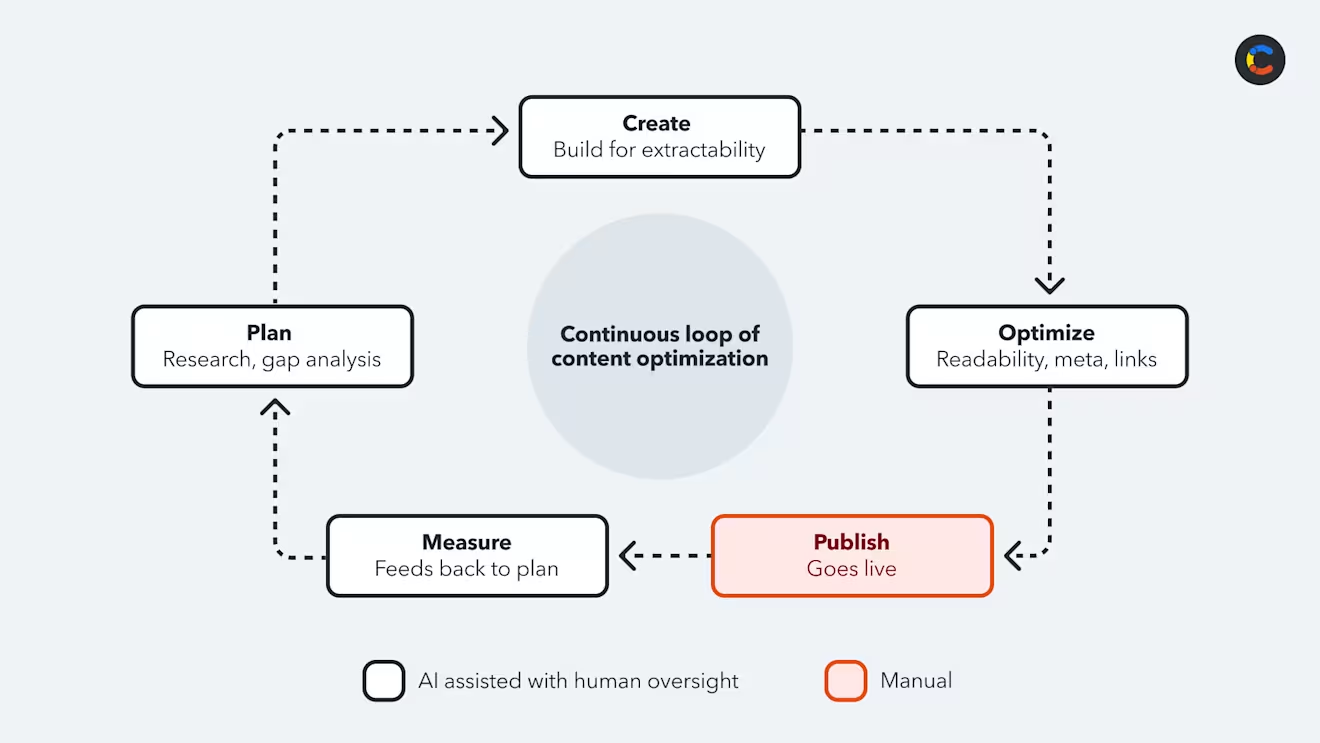
For existing content, you may run the content back through the first two stages to check that the AI agent researched and structured it well and there aren’t any content gaps, then move on to optimization.
How to measure AI content optimization
When it comes to AI content optimization, all of the traditional signals that are used to measure how well your content is doing in the wild still apply: rankings in the SERP, organic clicks, and engagement. It's possible to track referral traffic from AI platforms using Google Analytics, though GA4 needs some customization to capture it. This shows you where your product or service was mentioned as an answer or recommendation from an AI chat system and someone clicked through to your website.
One important thing to note is that if your content gets cited in "AI answers" (ChatGPT, Perplexity, Gemini, Google's AI overviews) it's generally good for visibility, but it's not an absolute guarantee of more traffic. Plenty of citations are read and never clicked. To track citations, you need citation monitoring tools that collect information on what AI systems are actually saying about you.
To get a more accurate read on performance, look at all three together:
Citations: Are you being surfaced? If so, in what way?
AI referral traffic: Are users clicking those citations?
Organic clicks together: Is traditional search still doing well?
Rules to avoid hurting your AI content optimization effort
Just as there are things you absolutely should do to optimize your content for AI, there is also a set of practices to follow to avoid having a deleterious effect on your chances to be cited in AI answers.
Keep content retrievable: As well as making the content itself accessible to AI systems (that is, retrievable and crawlable), make sure it's readable, and try to avoid dense copy — long and complex explanations can be harder to extract.
Put the substance of images in text: Any information presented in images should also be explained in text, preferably alongside the image. Avoid standalone images. AI systems primarily ingest the text of your page, not the images, so any valuable information you put in a diagram or screenshot will be at risk of being unreachable – at least to any AI system that doesn't have image reading baked in.
Keep important content on the page: For linked documents like PDFs, the file resides off the main page and therefore may not be retrieved during the crawling and ingestion phase. So it's best to keep anything important or information rich on the page itself so it can be crawled and pulled.
Be specific: When you can, avoid vague language. Concrete, unambiguous content is easier for a system to match to a query and lift cleanly. Vague or heavily hedged writing is harder for it to extract.
Make claims self contained: It's best to avoid claims that aren't self contained, whenever possible. If you use a specialized term, define it. If it's a factual claim, put the evidence in the text rather than relying solely on links.
Keep a human in the loop: It's best practice to avoid letting your AI run completely autonomously when making content optimizations. You should always have a person review the output, checking that it stays on brand and catching any mistakes before publishing.
How Contentful helps with AI content optimization
Contentful can help with AI content optimization in a number of ways. As a composable content platform, content architecture is at the heart of what we do, so you get easier content modeling and structured content by design. Contentful separates content from how it's displayed — every piece lives as a clean, labeled part, which is exactly what AI systems need for optimal extraction.
Contentful also has a number of AI features baked in for content optimization (no need to bring your own agents). AI actions let you apply AI tasks like writing meta descriptions, generating summaries, and running readability passes directly in the platform, approving or rejecting each suggestion as you go. If you need to optimize at scale, it's possible to run the same action programmatically across many entries at once. Workflows allow you to chain steps together with human approval built in. This makes it easy to set up AI automations and have a human sign off before anything gets published or moves forward in any way.
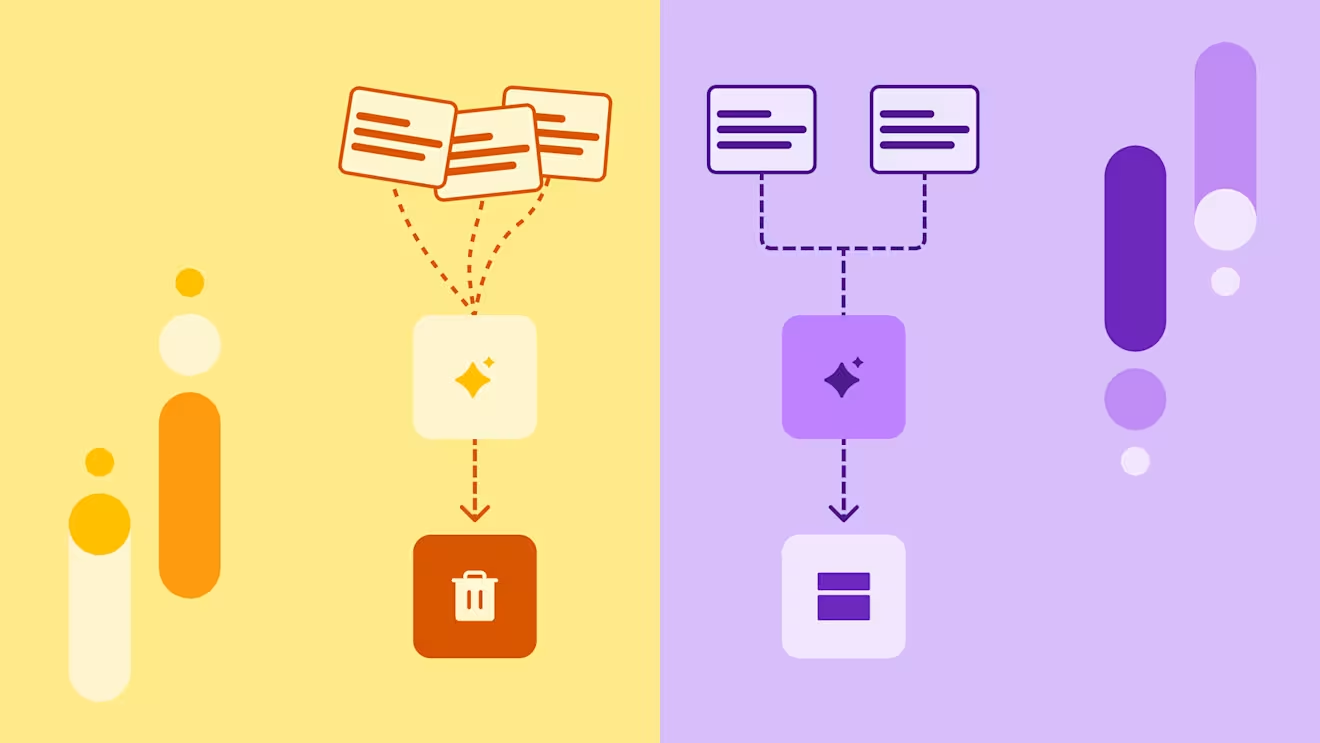
One of our new features, Content Semantics, continuously indexes your content in the background into a semantic layer. This can then be used to flag near-duplicate entries and suggest related pages to link to. It can then feed your AI actions relevant context from what you've already published. This allows you to query your own content to gain insights and ground any AI output in the context of your own content.
In the coming years, AI search will continue to change. New platforms will appear, and the ways content gets retrieved and cited will keep changing. To remain adaptable and competitive in this space, you need to keep your content structured in a platform built for AI from the ground up.

Inspiration for your inbox
Subscribe and stay up-to-date on best practices for delivering modern digital experiences.
Meet the authors

Asia is the SEO & GEO Manager at Contentful, where she supports organic search and AI-driven content discoverability strategies. Based in Berlin, Germany, she’s passionate about the evolving intersection of search, AI, and customer experience.
Related articles

How (and why) to build an app in Contentful
July 30, 2026

AI is now shopping for people: What your business needs for agentic commerce
September 10, 2026
Structured content for AI: Why content architecture is the foundation
August 26, 2026

Ready to start building?
Put everything you learned into action. Create and publish your content with Contentful — no credit card required.