From audit trail to active signal: Introducing near-real-time audit logs
Published on August 18, 2026




Inspiration for your inbox
Subscribe and stay up-to-date on best practices for delivering modern digital experiences.
Enterprise teams are moving quickly across markets, brands, channels, and business units. As digital experiences become more closely tied to revenue and customer relationships, security and platform teams need a clear view of what is happening inside the systems that power them.
That is why Contentful is introducing near-real-time audit logs as part of Enterprise Observability. Available to Enterprise customers, the release delivers Contentful audit events to customer-owned AWS S3, Azure Blob Storage, or Google Cloud Storage in approximately five minutes, on a best-effort basis.
The new stream adds read-access activity to the change activity captured in audit logs. It gives security, platform, DevOps, and governance teams a more timely source of context for investigation and operational response.
Organization Owners and Admins can enable it from Organization settings > Observability and configure the destination that fits their existing cloud and monitoring environment.
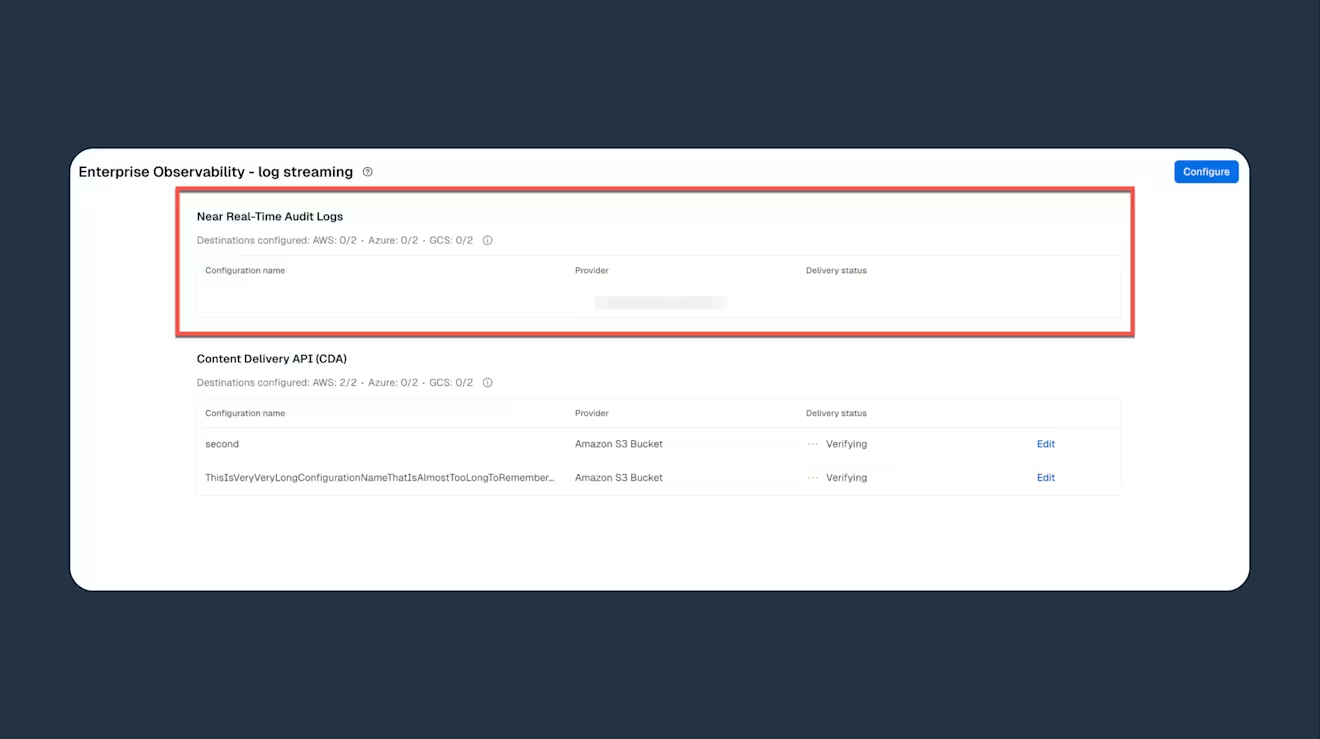
What near-real-time audit logs add
Near-real-time audit logs are designed for operational visibility. They complement daily audit logs, which continue to support historical review and completeness.
The new capability provides:
Approximately five-minute delivery, on a best-effort basis
Delivery to customer-owned AWS, Azure, or Google Cloud storage, where teams can connect the data to their existing SIEM and observability workflows
Write activity such as create, update, and delete operations, alongside GET/read events
Actor and request context that can help teams understand whether activity came from a user or an app and which resources were involved
The read-access signal is especially useful when teams need to understand access patterns, not only changes. It is based on Contentful API activity, and the available actor detail can vary depending on the authentication context.
As we explored in Every click tells a story: Audit logging for enterprise-scale content platforms, audit logs help enterprises reconstruct what happened across complex content operations. Near-real-time delivery brings that context closer to the moment when teams need to act on it.
How teams can use near-real-time audit logs
For enterprise organizations, the value of faster audit visibility goes beyond a shorter timestamp. It can reduce uncertainty during high-pressure moments, support more efficient investigations, and help teams use the operating model they have already invested in.
Investigating suspicious activity
A security team receives an alert related to sensitive content. Near-real-time audit events can give the team additional context in its existing security workflow, including the actor or app, the resource involved, the activity type, and the timing of the event.
That context can help teams assess whether the activity was expected, investigate a possible compromise, and build a clearer incident timeline. Read-access events add another perspective by showing when a resource was read, alongside the changes made to it.
Connecting content changes to production incidents
When a digital experience starts behaving unexpectedly, the cause may sit in application code, infrastructure, or content operations. Within Enterprise Observability, Platform and DevOps teams can use near-real-time audit logs alongside other Contentful log sources, such as Content Delivery API (CDA) and GraphQL logs, to correlate content changes with API activity, deployments, and service events while the issue is still active.
That can shorten the path to root cause and help teams distinguish between a content change and a wider platform or application problem. The practical impact is faster diagnosis, clearer ownership, and less disruption to customers when critical digital experiences are affected.
Supporting regulated and globally distributed operations
Organizations operating across regions, business units, and digital properties often want one consistent approach to monitoring and investigation. Delivering Contentful activity into customer-owned cloud storage allows teams to include the platform in existing security, observability, and governance workflows.
This can support internal controls and evidence-gathering processes for revenue-critical or regulated experiences. The feature becomes part of the organization’s operating model, while customers continue to determine how the data is retained, analyzed, and governed in their own environment.
The wider security operations market reflects this need for connected, timely signals. An IDC survey of 1,004 Security Information and Event Management (SIEM) users and managers, summarized by Expert Insights, found that organizations connect more than 100 data sources to their SIEM on average. A real-time detection engine was also the most frequently selected important SIEM capability in the survey. Contentful activity becomes more useful when it can participate in that broader operating picture.
Near-real-time audit logs and daily audit logs
The two streams are designed to work alongside each other rather than serve as interchangeable versions of the same product:
Daily audit logs | Near-real-time audit logs | |
|---|---|---|
Primary purpose | Historical completeness and a backstop, such as a compliance audit | Operational investigation and timely visibility |
Delivery | Approximately 24 hours | Approximately five minutes, best-effort |
Visibility | Change and account activity | Change activity plus read-access activity |
Daily audit logs continue to support historical review. Near-real-time audit logs add a faster operational signal for detecting and investigating activity while it is still relevant. Enterprise teams can use both streams when they need timely investigation as well as a longer-term record.
Getting started
Near-real-time audit logs are available to Enterprise customers as part of Enterprise Observability. Organization Owners and Admins can configure the stream in Organization settings > Observability, choose a supported cloud-storage destination, and connect the resulting events to the monitoring and security tools already used by their teams.
For configuration and event details, see the Contentful audit log documentation.
Launching alongside near-real-time audit logs, Audit Log Viewer App gives administrators a visual way to explore organization-wide audit activity. It brings together searchable events and summary views that can help teams understand activity patterns across their Contentful environment.
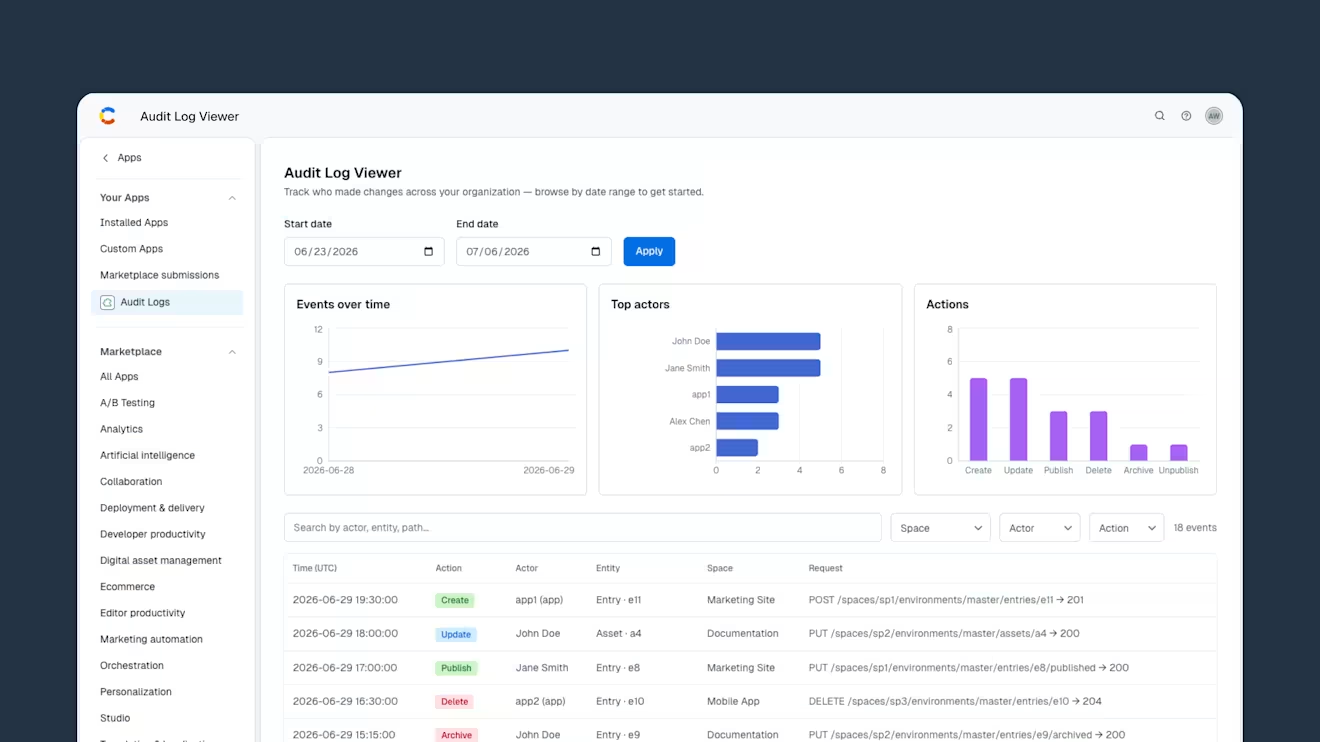
The app provides an early, practical step toward making audit activity easier to explore closer to the platform itself. For administrators, this makes it easier to spot patterns, investigate events, and build a clearer picture of activity across the organization.
Part of a broader enterprise foundation
Near-real-time audit logs sit within Contentful’s broader enterprise platform, which brings together governance and auditing, roles and permissions, observability, extensibility, security and compliance, scalability, and support for teams operating at scale.
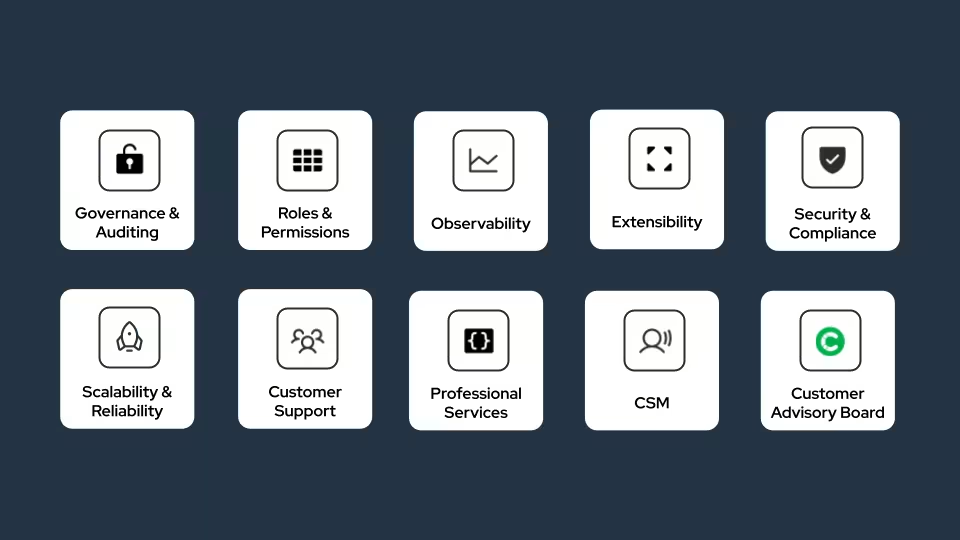
Contentful enterprise capabilities provide a foundation for secure, governed, and scalable digital experiences.
Contentful for Enterprise is designed to help organizations move quickly while maintaining the control, resilience, and flexibility expected from enterprise technology. Contentful continuously invests in the capabilities that support the world’s largest companies as they adopt new channels, distributed ways of working, and AI-assisted content operations. Learn more about our security program.
That investment is visible across recent releases. Multiple SSO configurations for a single organization helps Enterprise organizations support users across business units, regions, and subsidiaries without splitting into separate organizations or exempting users from SSO. Alongside near-real-time audit logs, it reflects a broader focus on making Contentful more flexible and enterprise-ready as organizations scale.
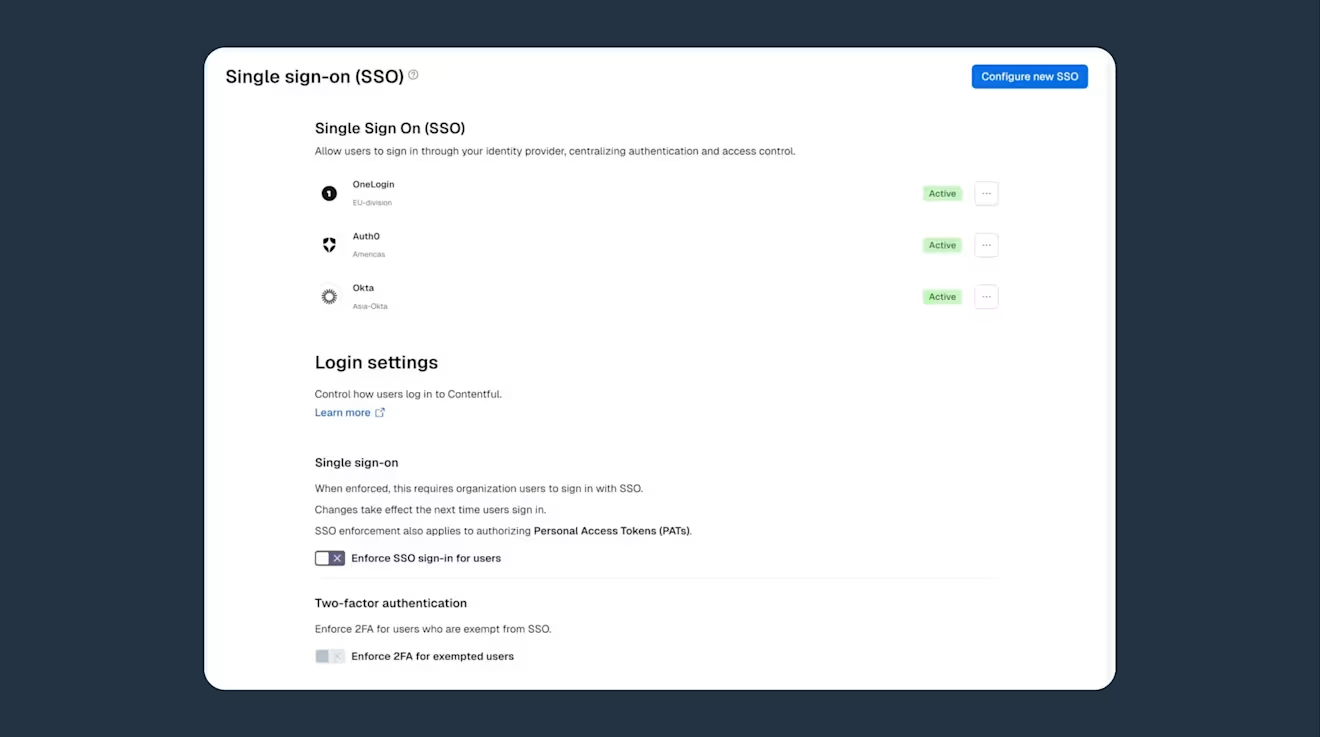
See what’s possible with Contentful for Enterprise
Enterprise readiness is built through the interaction of many capabilities. It comes from giving teams the visibility to investigate, the controls to govern access, the flexibility to fit existing operating models, and the reliability to support experiences that matter to the business.
Contact our team to learn how Contentful can support your organization’s enterprise content and digital experience needs.

Inspiration for your inbox
Subscribe and stay up-to-date on best practices for delivering modern digital experiences.
Meet the authors

Malin is a Senior Product Manager at Contentful, leading the Platform Insights team in providing customers with greater visibility into their use of the platform. By delivering analytics, reporting, and governance capabilities, he helps organizations make data-driven decisions, optimize their usage, and ensure transparency. With over a decade of experience in B2B SaaS across mobile and web, Malin specializes in building insights-driven solutions that empower customers. Outside work, he enjoys cycling long distances, running, illustrating, and exploring psychology.

Marco is a B2B content creator and product marketer blending technical with creative skills. From the early stages of product ideation to a successful market launch, all the way through to sales enablement, he loves to take products and translate them into clear, relatable messages.
Related articles
Automations in Contentful: Keep your workflows moving forward
January 22, 2026

Integration Spotlight: Imgix brings AI-powered image enhancements to Contentful
May 2, 2025
From creation to optimization: Automate your content process with new AI innovations from Contentful
March 31, 2025

Ready to start building?
Put everything you learned into action. Create and publish your content with Contentful — no credit card required.